Tag: Cultural heritage fortresses

  • Diverse and rich fortified cultural heritage of the Iberian Peninsula. Basis for culture tourism with the European Culture Route Fortified Monuments FORTE CULTURA®

    Hans-Rudolf Neumann, Dirk Röder, Hartmut Röder

    Abstract

    Fortresses are architectural pearls, cultural sites, event locations, experience places and memorials, mostly situated at breath-taking places on mountains, rivers or in the under-ground. Fortresses are monuments of common European history, they mirror the past into the present, connect cultures and offer deep insights into the historical conflicts. Fortified monuments are part of what makes Europe unique and attractive.

    This cultural heritage has to be preserved and made accessible for the culture tourism at the same time. The Iberian fortified heritage has great potential for new culture touristic topics and travel routes away from mass tourism. Therefore, cultural routes are a useful instrument. The European Culture Route Fortified Monuments -FORTE CULTURA®- is the European umbrella brand for fortress tourism. It offers useful instruments for international marketing of fortified monuments.

    The implementation of the attractive “architectura militaris” of the Iberian Peninsula into the culture route FORTE CULTURA® makes it possible to network this culture asset touristically, make it visible and experienceable on international tourism markets and market it Europe-wide. By implementing a new touristic regional brand “FORTE CULTURA - Iberian Fortified Heritage” the qualified culture tourism will be addressed. This supports a balance between over and under presented monuments and extends the sphere of activity of local actors onto whole Europe.

    1. introduction

    More than 150 fortresses dating from the late 15th to the 19th century still exist on the Iberian Peninsula. There are also medieval fortresses, Castello's, lines of defence such as the tower lines on Spain's southern coast, and countless fortifications of the twentieth century. Only the southern tip of Spain was fortified between 1940 and 1944 with 498 bunkers, machine gun nests and artillery positions.

    This unique fortified heritage holds great potential for sustainable cultural tourism, which has so far not been fully exploited. Between world-famous fortresses such as the Alhambra in Granada with 2.7 million visitors per year, well-known fortresses in Barcelona, Alicante, Jerez, Lisbon or Torres Vedras and almost unknown fortresses such as Elvas (UNESCO), Badajoz, Tabarca or Roses is a very high perception difference.

    The creation of entire and networked offers for fortress tourism on the Iberian Peninsula is supposed to act against this descent and at the same time create a compensation and decentralisation of excessive tourism flow on the hotspots.

    Often, diverse and individual culture programmes are already offered for a large target group at fortress locations. The common and joint marketing as part of an international brand for fortress tourism increases the individual reach and creates increasing publicity of the participating fortresses, image improvements and economic effects.

    Therefore, the authors developed the European Culture Route Fortified Monuments FORTE CULTURA® and found the European Fortress Tourism and Fortress Marketing Network. The creation of territorial or themed fortress clusters as marketing partners is an important principle to define and underline regional and local identification characteristics.

    2 Fortified heritage on the Iberian Peninsula - Basis for Culture Tourism

    The Iberian Peninsula has great potential for the implementation of culture touristic offers of Iberian fortresses into international tourism markets with FORTE CULTURA®.

    The “architectura militaris” of the Iberian Peninsula is shaped by the influence of important historical epochs and their ruler, traditions, technical knowledge and skills. From the city walls of Phoenicians to the bunkers of the Cold War, the fortification architecture has steadily developed and adjusted to the progress of weapon technology.

    2.1 Mapping of Iberian fortification heritage

    To get important insights into the localisation and the diverse fortress types, ECCOFORT developed a map of the Iberian fortification heritage. For the first time the whole historical spectrum of fortified monuments over the important epochs until the Cold War is collected. This is not finished.

    The Iberian fortified heritage concentrates along the coasts, in the Spanish-Portuguese border area and along the Pyrenees for protection against the European Great Powers.
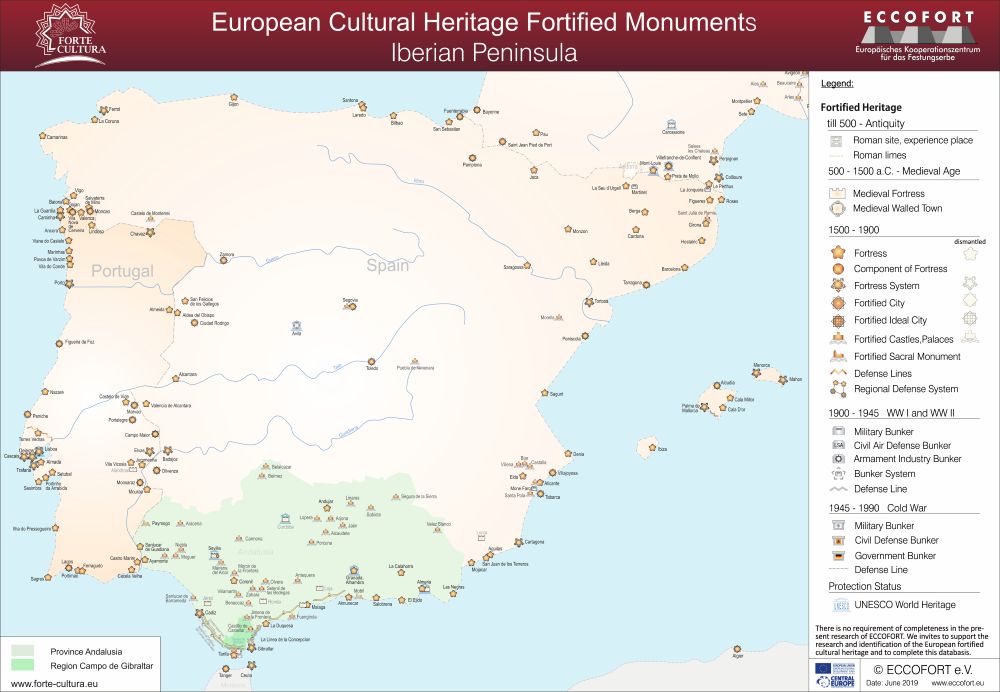
    Especially the following epochs of fortification architecture are strongly represented on the Iberian Peninsula:

    Middle Ages

    • Moorish fortresses, mostly medieval palace fortresses with detailed defence and provision systems, such as Granada, Jerez, Ronda, Sevilla, Cordoba, Malaga.
    • Castles, palaces and sacral buildings with architectural defence elements.

    Late Middle Ages

    • Architectural adjustment of existing castles, palaces, sacral buildings and medieval fortresses to upcoming fire weapons, such as Alhambra in Granada, Segovia, Castalla.
    • Large signal and defence networks, such as Almenaras towers of Malaga coast.

    Sixteenth to nineteenth century

    • Construction of newly bastion-like fortresses, ideal fortified cities under military aspects and territorial fortification systems, such as Cadiz, Lisbon, Elvas, Cartagena, Gibraltar.

    Twentieth century

    • Bunker buildings and defence lines of World War I and II and the Cold War, such as La Línea de la Concepción, Tarifa.

    3rd World of Experience - Rich cultural and experience offers in fortresses

    Many of those fortified monuments are today open for tourism and offer a rich world of experience. This includes events, museum and exhibitions, family and children offers, art and culture, military history, medieval spectacles, recreation and enjoyment, accommodation and life, sport and leisure, nature, parks and gardens, secret architecture, memorials and monuments.

    There are scenic tours on the citadel of Jaca, where the guests follow actors through the fortress and learn about the history of the citadel. In La Línea de la Concepción three centuries of Spanish architectural history are connected with the Spanish-English conflict of Gibraltar. In La Villajoyosa, Alicante, Denia and many other cities the festival of the Moors and Christians is celebrated every year.

    Profound research of fortresses in their building structures, their history of development and use and the history of their architects, residents, attackers and defenders showed diverse content

    for culture touristic approaches. Modern technologies allow fascinating application virtually, in reality and between both. Fortresses and culture historical experience offers build a “perfect match” which addresses and fascinates all generations and target groups.

    4th Travel world - Implementation of the European Culture Route Fortified Monuments FORTE CULTURA® as touristic brand on the Iberian Peninsula

    FORTE CULTURA® is a new European brand for culture tourism in fortifications. As European cultural route, FORTE CULTURA® markets fortified monuments in all of Europe with its touristic offers, architectural specialities and the joint European history.

    Sub brands like “Iberian Peninsula”, “Andalusia” or “Campo de Gibraltar” connect local spirit, individual history and regional specials with the European brand. This is shown in the FORTE CULTURA® travel recommendations and the tours by certified FORTE CULTURA® guides, such as

    • Fortification giants on the south-west coast of Spain: A journey through 1000 years of religion, culture and “architectura militaris” in famous Andalusian coastal cities (Cadiz, Tarifa, (Gibraltar), La Línea de la Concepción, Malaga)
    • Arabian Nights in South Spain: The Moorish fortified heritage and the hispanomusulman art in Andalusia, Discover the unique bastions as witnesses of the Moorish occupation and their rich cultural offer (Granada, Loja, Málaga, Ronda, Jerez, Sevilla, Córdoba)
    • The Algarve Fortresses - cliffs, islands and invasions: from Ferragudo to Ilha do Pressegueiro

    The creation of micro and macro regional fortress clusters as organizational levels is an important element to emphasise the regional identities and to develop authentic travel and experience offers for the international tourism markets. In Spain, this will happen under the lead of the city La Línea de la Concepción in the tourism region Campo de Gibraltar.

    5. transnational cooperation: European Fortress Tourism and Fortress Marketing Network

    “FORTS-2-MARKET” is the self-explanatory strategy of the “EUROPEAN FORTRESS TOURISM AND FORTRESS MARKETING NETWORK” which was founded in 2014 from 9 fortifications in 7 nations.

    This association of fortified monuments is a non-government organisation and wants to raise the quality level of the European fortress tourism and fortress marketing. Tourism shall generate new income in order to preserve and use the cultural heritage fortified monuments. The network manages the European culture route FORTE CULTURA® and the transnational cooperation of fortresses in marketing activities.

    The organisation and execution of Europe-wide marketing initiatives like the “European Fortress Summer 2018” or “75 years end of World War II in fortresses” is as much part of the spectrum of the network as the planning and execution of transnational funding projects.

    5. conclusion

    The Iberian Peninsula has a high potential for development and implementation of fortress tourism on international level. Tourism generates income and an investment friendly climate, which can contribute to the protection and preservation of the cultural heritage fortresses.

    The European Culture Route Fortified Monuments FORTE CULTURA® is available as an attractive European brand for fortress tourism, which provides a large spectrum of instruments for individual marketing of fortresses under a common label.

    FORTE CULTURA® stimulates the regional cooperation of fortified monuments, forms regional clusters and integrates existing regional fortress networks without them losing their sovereignty or authenticity. (www.forte-cultura.eu)

    The implementation process of the culture route will be accompanied by the European Fortress Tourism and Fortress Marketing Network and offers new possibilities for international cooperation, knowledge transfer, joint (support) projects and innovation.

    The fortified monuments of Europe are welcome to use the European Culture Route FORTE CULTURA® and the offers of “FORTS-2-MARKET” profitably as a network member. (www.forte-cultura.network)

    References:

    FRANCO, Álvaro López: Dirk Röder: “Los monumentos fortificados hacen a Europa única y atractiva”; in: Descubrir la Historia, Número 23 / Nov.-Dec. 2019; San Roque / Cádiz, pag. 29 - 33

    NEUMANN, Hans-Rudolf: Capitalising on Fortified Heritage: The FORTE CULTURA project in Central Europe; in: JAIN, Shikha / HOOJA, Rima (Ed.): Conserving Fortified Heritage. The Proceedings of the 1st International Conference on Fortifications and World Heritage, New Delhi, 2005 (ICOFORT Conference documentation); Cambridge (Cambridge Scholars Publishing), 2016; pag. 207 - 219

    NEUMANN, Hans-Rudolf: Gibraltar - Tarifa - La Línea de la Concepción. Fortificatory excursion report of a study trip from 15.09. to 22.09.2018 (= Fortification report of a study tour from 15th until 22nd September 2018); Regensburg (S. Roderer publisher's), 2019

    NEUMANN, Hans-Rudolf / RÖDER, Hartmut: EU Funding project FORTE CULTURA - on the Way to a European culture route of the fortified heritage; in: NARĘBSKI, Lech (ed.): Fortyfikacje nowożytne w Polsce - Badania, Realizacje, Projekty. Zagospodarowanie do Współczesnych funkcji (= Modern fortresses in Poland - investigations, realisations, projections. Deployments for contemporary functions). Collective work under the editorship under Lech Narȩbski, ed. Urząd Marszałkowski Województwa Kujawsko-Pomorskiego i Toruńskiego; Toruń, 2013, pag. 257 - 265

    SÁEZ RODRÍGUEZ, Àngel J. Sáez: Un par de horas en ... las torres almenaras del Campo de Gibraltar (= Guías del patrimonio del Campo de Gibraltar); Tarifa, 2017

    TÉLLEZ, José Martinez: Arquitectura Linense (Series: El Cuartel de Infantería Ballesteros, El fuerte Tunara, La Comandancia militar, La Línea de Contravalación, Torres Vigía, Torres Vigías); in: La Verdad del Campo de Gibraltar, March - September 2014

    VALDENEBRO GARCÍA, José Vicente / ELIZALDE MARQUINA, Esther (Coord.): Proceedings of the International Conference on Fortified Heritage: Management and Sustainable Development. Pamplona, 15-17 October 2014; ed. Pamplona City Council - Ayuntamiento de Pamplona / Bayonne City Council - Mairie de Bayonne; Pamplona, April 2015

    ZAUZIG, Oliver: Küstenbatterien und Befestigungen an der Strait von Gibraltar von 1936 bis heute (= Coastal batteries and fortifications on the Strait of Gibraltar from 1936 to the present day); in: Fortification. Journal of the Studienkreis für Internationales Festungs-, Militär- und Schutzbauwesen e.V., N° 27 / 2013; pag. 3 - 56
  • Programme to capitalize the fortified cultural heritage in Europe

    Research - Tourism - Marketing - Networking

    Dirk Röder

    The cultural heritage of fortified monuments belongs to the most important contemporary witnesses. It's a built history of today's Europe in an extraordinary architecture. It has a high potential for cultural tourism, as an economic factor, as a living cultural and historical space for the needs of modern society.

    This potential is not sufficiently mobilised. Only very few fortifications are playing in the first class of well-managed, financed and promoted monuments at the tourist markets. It needs instruments and common transnational activities to capitalise this heritage in all regions. The European Cooperation Center of Fortified Heritage -ECCOFORT- in Berlin develops and practices a PROGRAMME FOR CAPITALIZING OF FORTIFIED MONUMENTS with 4 pillars:

    • NETWORKING - to manage the tourism, marketing and transnational cooperation
    • RESEARCH - for a market-oriented systematisation, inventory and mapping
    • TOURISM - based on a powerful tourism brand and route “FORTE CULTURA”
    • MARKETING - with tailor-made instruments and campaigns for fortified monuments

    Introduction: Fortified Heritage - potential for capitalising

    Europe as a continent has the largest cultural heritage and it is important to take care of this CAPITAL, to use it and to refine it socially. It is not for nothing that cultural tourism is a constantly growing economic branch, employer and innovation engine with income effects for cultural sites, cities and municipalities, retails, service, hospitality, catering, transport, guides, etc.

    Culture routes are an important instrument to present this regional, national and European cultural heritage and to mobilise it as an economic factor. The culture route programme of the European Council strengthens this strategy. Themed culture routes make the cultural heritage visible and experienceable.

    1. programme to capitalize the fortified cultural heritage in Europe

    The cultural heritage of fortified monuments belongs to the most important contemporary witnesses. It's a built history of today's Europe in an extraordinary architecture.

    It has a high potential for cultural tourism, as an economic factor, as a living cultural and historical space for the needs of modern society.

    This potential is not sufficiently mobilised. Only very few fortifications are playing in the first class of well-managed, financed and promoted monuments at the tourist markets. It needs instruments and common transnational activities to capitalise this heritage in all regions.

    The European Cooperation Centre of Fortified Heritage -ECCOFORT- in Berlin, develops and practices a PROGRAMME FOR CAPITALIZING OF FORTIFIED MONUMENTS with 4 pillars:

    • RESEARCH - for a market-oriented systematisation, inventory and mapping
    • TOURISM - based on a powerful tourism brand and route “FORTE CULTURA”
    • MARKETING - with tailor-made instruments and campaigns for fortified monuments
    • NETWORKING - to manage the tourism, marketing and transnational cooperation

    2. fortress RESEARCH for a market-oriented systematisation, inventory and mapping of fortified monuments

    Experts estimate the occurrence in Europe at around 5,000 fortified monuments from epochs after the introduction of fire weapons in the 14th centuryth and 15th century. That includes fortresses, fortified cities, fortified ideal cities, large fortification systems, fortified castles and palaces, fortified sacral buildings, fortified border and defence lines and bunker and bunker systems. It needs a typification of the monuments under the aspect of the tourist markets, as well as a mapping. 

    ECCOFORT developed a uniform system of types and icons for graphic recognition of fortified monuments, oriented on the demands of tourist markets. This is on the way to becoming the standard in Europe.

    3. fortress TOURISM based on a powerful tourism brand and cultural route “FORTE CULTURA”

    Fortified monuments have a very high touristic potential, but until today only a few of them benefit from that. They are uniting diverse offers/attractions at one place and are often a touristic unique characteristic, which fascination spreads over all generation. They are emotionalising, authentic, incisive, cultural speciality with interesting history, tradition, nature and architecture, independent of trends, cycles and demographic development.

    The European Culture Route of fortified monuments -FORTE CULTURA- provides for the first time a specialised touristic product for fortress tourism in Europe and furthermore, to experience the rich cultural offer.

    Different travel recommendations such as sightseeing tours, study tours and excursions, cultural trips or adventure tours, car or bike tours address diverse target groups. The culture route is permanently developing and expanding with new themes and journeys with a high experience value.

    More than 100 fortresses from 12 European countries are implemented. It generates economic effects for the fortresses with more tourists, incomes and market presence.

    4. fortress MARKETING with tailor-made instruments and campaigns for European fortified monuments

    The fortress heritage needs a new quality of market presence. The quality and the marketing determine the economic success of tourist offers on the market.

    With the marketing programme for the Cultural Heritage Fortified Monuments, a significant gap will be filled. Fortress architecture and its experience value are for the first time presented nationally and internationally under a uniform brand and a coherent design. A new dimension of market presence of the fortified monuments is now possible. For this case there are two fields of acting:

    1. marketing of the tourism product Culture Route “FORTE CULTURA”

    2. marketing of single fortresses with its tourist offers

    Both are linked closely but can also be used separately.

    The most important marketing goal is the placement of the Culture Route and its experience offers on the national and international tourism market. This way touristic economic effects for the participating fortified monuments and fortified cities are to be gained. Especially the number of visitors is to be increased and this way an economical, financial, social-cultural and memorial preserving impact for the fortified cities is to be initiated. 

    Furthermore, it is a goal to make the meaning of the rich, wide-spread cultural heritage visible and to improve the understanding in public, politics and the economy.

    Via the portal www.forte-cultura.eu, the digital prints and publications are distributed, like the FORTE CULTURA-travel guide, the image prospect, newsletter etc. The portal links with the participating fortified monuments and the tourism organisations. Further e-marketing tools such as an event calendar, interactive maps, etc. are provided or are in development. At first, the campaign “EUROPEAN FORTRESS SUMMER 2018” in the European year of cultural heritage was successfully carried out. It's a signal for European cooperation of fortified monuments, as well as the best practice to show the fortified heritage at the tourist markets.

    5. fortress NETWORK to manage the tourism, marketing and transnational cooperation

    “FORTS-2-MARKET” is the self-explanatory strategy of the “EUROPEAN FORTRESS TOURISM AND FORTRESS MARKETING NETWORK reg.ass., which was founded in 2014 from 9 Fortification in 7 nations. This association of fortified monuments is a non-government organisation and wants to raise the quality level of the European fortress tourism and fortress marketing. Tourism shall generate new income in order to preserve and use the cultural heritage fortified monuments. The network manages the European culture route FORTE CULTIRA and the transnational cooperation of fortresses in marketing activities.

    6. capitalising effects of the fortified heritage

    With these 4 pillars, there are many capitalising effects for the fortified heritage, such as:

    Economic effects:

    • Increase of income of fortified monuments by stronger touristic demand
    • Increase of income of communal regions by higher utilization of touristic infrastructure and tourism economy, absorption of purchasing power
    • Strengthen the competitiveness on the competitive tourism market
    • Improvement of profitability of (public) investments into the touristic infrastructure, the touristic offer and the fortification
    • Stimulating the expansion of tourist infrastructure
    • Tendential relief of public budget and refinancing effects on public expenses
    • Preservation or creation of employment and income
    • Management of the monument, therefore preservation by usage

    Social cultural effects:

    • Pulling effect on touristic operators and therefore enrichment of cultural offers also for locals
    • Integration of fortified monuments into the modern life of city and region
    • Inclusion of fortified monuments into the local city and region development
    • Strengthening of identity and life quality in the city/community
    • Image win for fortified monuments, city and region and defining of unique characteristics

    7. conclusion

    The programme for capitalizing is on a successful way with benefits for all participating fortified monuments. There is a good chance to use this initiative in the Mediterranean region as a chance to maintain, to use and to experience the rich and attractive cultural heritage fortified monuments, as well as to organize a strong and powerful transnational cooperation.

  • We Stand With Ukraine

    We Stand With Ukraine

    Activities of the EFFORTS & FORTE CULTURA fortress network to preserve the historical fortress heritage and support the people of Ukraine

    Factual article, published in the excursion guide Westwalltag, July 2022
    Author: Dirk Röder

    Corona is still far from over when the world is shaken up by another piece of terrible news. On 24 February 2022, Russia launched a war of aggression against Ukraine that continues to this day. The reasons for this are far-reaching and stem from global political processes that began a long time ago.

    The FORTE CULTURA network, and I personally, condemn the war in the strongest possible terms, and corresponding statements can be found in all our communication channels. But how does this help the people in Ukraine? That was a question that concerned us from the very beginning. Through my roles in fencing in Berlin, I was able to observe how quickly and effectively help can be organised. We collected donations in kind, drinks and everyday consumer goods for the people arriving daily at Berlin Central Station from Ukraine. We arranged accommodation and opened our clubs to fencers from Ukraine, giving them a bit of „normality“. This was not so easy at the level of our international fortress network. Our members have certainly started similar activities in their environment as we have in Berlin fencing. But what exactly can a tourism-orientated network do?

    Communication

    First of all, don't keep the war quiet. Unvarnished communication about the events in Ukraine is one of the most important tools in view of the targeted influence and misinformation by Russian and other state media. As a European cultural route, FORTE CULTURA helps to preserve the important cultural heritage of the fortress monuments and make it accessible to everyone. The fortresses of many eras, once built as military defence objects, are today places of peace and culture for all people. They tell the story of Europe and serve as a reminder of the devastating consequences of countless wars. In this context, every fortress tour is a contribution to peace.

    Set an example

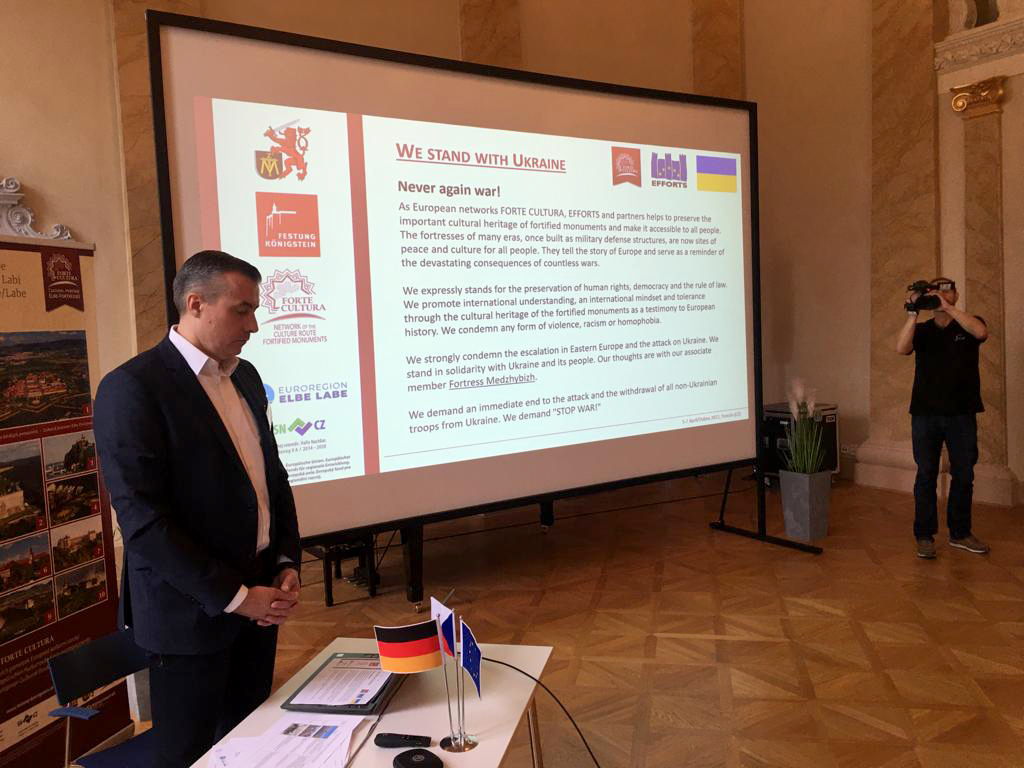
    On our International Fortress Conference in April 2022 in Terezín (CZ) we have put the Ukraine war at the forefront.

    The programme included a minute's silence in solidarity with the people of Ukraine and a joint declaration against war, for human rights and democracy, which was also reflected on Czech television and in the press.

    Our Ukrainian network member, Mezhybizh Fortress, was able to report on the situation on site as part of a photo documentation in Terezín. About how they built anti-tank barriers from scaffolding that had been erected for planned restorations. About how they sewed camouflage nets. About how they offer protection and shelter to women and children on the run, equip them with relief supplies, provide them with childcare and schooling. About how they open themed exhibitions on the war in their museum and how they pray together for peace. About how the historic walls of the fortress once again have to fend off war, persecution and oppression.

    In Terezín, we have symbolically declared our previously passive network member Mezhybizh Fortress a full member and are taking over the annual contributions for an indefinite period. As a result of the upgrade, Mezhybizh Fortress became the first official Station of the European cultural route FORTE CULTURA in Ukraine and has since been integrated into our brand instruments and brand communication.

    Together with EFFORTS (European Federation of Fortified Sites), a campaign was launched, starting in Terezìn, to network Ukrainian fortified sites with fortified sites from the EFFORTS & FORTE CULTURA network. In two online workshops to date with participants from a total of 12 countries including Australia, support measures have been discussed and concrete cooperation agreements concluded, e.g. between the fortresses of Šibenik (HR) and Pidhirtsi (UA).

    Further collaborations are in preparation, for example between Ivano-Frankivsk (UA) and 's-Hertogenbosch in the Netherlands. Friedrich Wein has also been endeavouring to establish a link between the Westwall and the Arpad Line from the outset, which is very difficult given the situation on the ground. He is actively supported by EFFORTS & FORTE CULTURA, in particular by Rafael Deroo (EFFORTS) and Olha Tikhonova, a young Ukrainian doctor of architecture who is currently working at the Polish Academy of Sciences. Through them, we were also able to learn many details about the extensive fortress heritage in the Ukraine, which can be easily understood in their Overview presentation (PDF).

    Of course, all these activities cannot eliminate the war and the unimaginable suffering of the people in Ukraine, but together many small contributions and voices add up to a big one. If you would also like to get involved, please contact our network office.

    #standwithUkraine

  • Corona Folgen für Festungsmonumente – Edit 2021

    Corona consequences for fortress monuments - Edit 2021

    How the coronavirus pandemic is affecting fortress museums and monuments

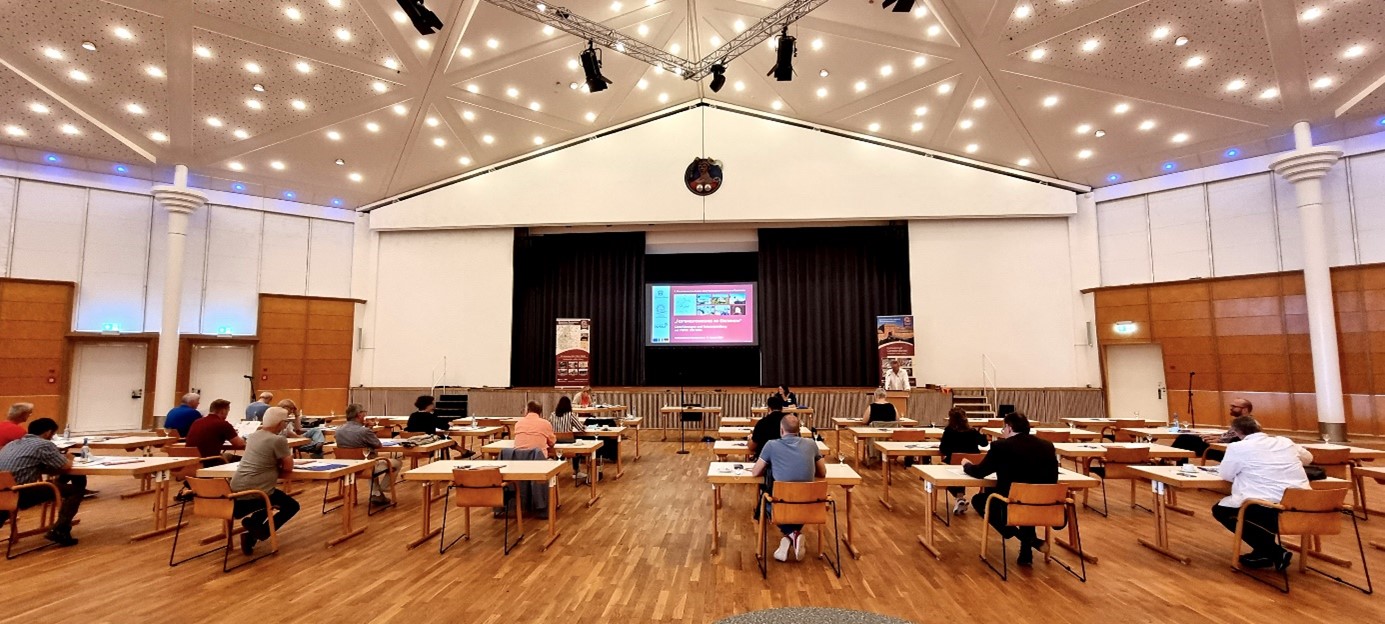
    Conferences in Corona times - 4th symposium on the expansion of the Upper Rhine fortress cooperation on 11 August 2021 in the Germersheim town hall with over 30 participants

    Factual article, published in the excursion guide Westwalltag, July 2021
    Author: Dirk Röder

    Everything that was said in last year's article still applies. Corona still demands a lot from us. Fourth wave, fifth wave, new mutations - nobody can say what's coming. Humans are adaptable, so they react. Depending on their individual constitution, initially to the vaccine serum. This (and the right app) gives them access to the vaccinated group. This in turn gives them access to restaurants, exhibitions and museums, to a reasonably normal cultural life.

    Fortresses and museums benefit from this. Now experts in drawing up and implementing hygiene plans, visitor guidance systems and „corona-safe“ cultural programmes, they are able to meet the continuing high demand. So they are surviving and adapting. With digital ticket systems, online bookable visiting time slots, digital culture.

    However, employees, unskilled labour and seasonal workers, e.g. in the areas of trade fair and event management or catering, were not so lucky. They had to reorient themselves in many places. In the catering industry in particular, many no longer saw any future at all and changed careers completely. This is now leading to a noticeable shortage of labour in restaurants, cafés and takeaway chains across Europe.

    What we have learnt from Corona

    Firstly, flexibility, through adaptation and improvisation, through appropriate strategic planning. Hygiene and self-protection continue to be the only effective measures against infection at present. Perhaps also patience or composure in the face of constantly new reports or the confusion of new rules and regulations every week at least.

    But digitalisation in any case. Digital communication, digital cultural offerings, digital worlds of experience as an extension of real cultural offerings, digital admission, ticketing, control and measurement systems and much more are the big winners of the pandemic.

    This is a great opportunity for the cultural heritage of fortress monuments, because digitalisation marks the next milestone in its evolution and thus secures its future. Because digital tools open up new target groups, ensure diversity and the removal of barriers, and revolutionise the dissemination of information. The coronavirus paved the way for this evolutionary step to be taken and completed much more quickly across the board.

    Digitalisation is also a major step forward for FORTE CULTURA. The new self-image of digital communication has reduced the need for business travel by up to 90%. In addition, communication takes place at shorter intervals, allowing projects to be driven forward in an efficient and goal-orientated manner. The cultural route and the fortress network have been strengthened by the pandemic, although tourism was not possible or only possible to a very limited extent.

    Networking in times of pandemic using the example of the Upper Rhine fortresses

    The example of the Upper Rhine fortress region shows impressively what was and is possible despite all the restrictions. On the initiative of the fortress town of Germersheim, supported by FORTE CULTURA, the PAMINA Eurodistrict and the Baden-Alsace-Palatinate Tourist Association (Vis-à-Vis), a fortress community has been created as part of a cross-border project that currently includes 30 fortress monuments and museums on both sides of the Franco-German border.

    See FORTE CULTURA Regional Profile Upper Rhine: www.forte-cultura.eu/oberrhein

    A Franco-German image flyer with a regional map was jointly developed and printed in March 2021 with a print run of 100,000 copies. In addition, a stamp pass with a competition was developed and printed in a print run of 15,000 copies. Furthermore, a travelling exhibition on the „Fortress heritage of the last 350 years in the Upper Rhine region“ with 12 boards was developed and produced. All of this was achieved in many online meetings and without meeting in person once. The travelling exhibition even had to be „smuggled“ across the Franco-German border in times of contact bans and border closures so that it could be opened at the Musée de l'Abri de Hatten (FR).

    In addition, the marketing campaign „Fortress Summer Upper Rhine 2021“ was prepared as part of the „European Fortress Summer“ and finally successfully launched on 15 April with a hybrid press conference. Over 90 events have been and will be organised in the participating museums and fortresses on the Upper Rhine and communicated using multimedia.

    There were also 2 online workshops on the topic of „Social media for fortress monuments“, together with the FORTE CULTURA Elbe fortresses. The 4th symposium on the expansion of fortress cooperation on the Upper Rhine, on 11 August 2021 in Germersheim, was the first face-to-face event of the Upper Rhine fortress cluster since the start of the pandemic, and the topic „Guided tours and travel development with FORTE CULTURA“ was correspondingly future-oriented. On 9/10 October 2021, the „Fortress Summer Upper Rhine 2021“ will hopefully come to a glittering conclusion with a major fortress festival in Rastatt (DE). The consistently positive feedback on marketing tools, social media activities and events so far gives us confidence for the coming season, with or without the next wave of the pandemic.

    It goes on. At least that's my impression when I correspond with fortress monuments all over Europe.

    If you move, you change your position.

  • Corona Folgen für Festungsmonumente

    Corona consequences for fortress monuments

    How the coronavirus pandemic is affecting fortress museums and monuments

    Factual article, published in the excursion guide Westwalltag, July 2020
    Author: Dirk Röder

    The coronavirus pandemic has severely impacted our lives and work in many areas and has probably changed them forever. Fortresses and businesses dependent on tourism have experienced and are still experiencing the biggest crisis imaginable, with far-reaching economic and sometimes existential consequences. Those who were hit by the disease were often left with nothing but hope and the support of family and friends.

    However, the instruments for overcoming the crisis were extensive: working from home, short-time working, closures, contact bans, social distancing and hygiene rules, government funding, studies, laws, research, concepts, regional initiatives, local aid and much more.

    Nevertheless, the real absence of guests and thus tourist income has hit many monuments, operators and interest groups hard and has had a lasting effect. Ongoing costs for energy and property maintenance had to continue to be paid, and freelancers lost their income from one day to the next. Managers and operators had to familiarise themselves with new laws and regulations and had additional administrative work to do when applying for short-time working and subsidies, deferring and extending ongoing projects or cancelling tickets.

    In order not to be forgotten, newsletters, posts, video clips, online quizzes and puzzles as well as virtual tours were produced, but did not generate any revenue.

    Those who wanted to reopen first invested in protective and hygiene measures and disinfectants and reorganised staff schedules. The tour guides became pandemic experts and safety officers to enforce property rules. The situation was made even more difficult by regional differences in regulations and interpretations that were incomprehensible to guests from outside the region. Complaints management at locations with more than 250,000 visitors per year at least doubled. Operators of locations with small rooms wondered why all the effort was needed if a maximum of only 2 people were allowed in the property.

    In addition, interest groups and volunteer operators have often fallen through the cracks when it comes to federal and state funding. And while the easing of restrictions since the beginning of June has led to limited visitor numbers again in many places, the entire event sector is still almost completely idle. Planned events, some of which have already been invested in, have had to be cancelled or postponed for the long term, and event partners that have been tied up may go bankrupt, taking the invested capital with them. The commemorative year marking the 75th anniversary of the end of the Second World War, which particularly affects the fortress heritage of the Westwall, has been cancelled completely and often without replacement. Some authorities are currently holding on to the ban on major events for a period of two years(!).

    But, and fortunately a but can be added, many borders have been reopened, restrictions have been eased and tourism businesses and museums recorded higher visitor numbers in June than in the same period last year in some cases. The hunger for leisure, holiday and adventure activities is unquenchable, especially close to home and with a sense of security. Those who cater to these target groups will soon see noticeable success.

    Fortress monuments have the advantage that they can be multidimensional places of experience and exert a certain fascination on many target groups per se. They also often offer good to very good conditions for „corona-safe tourism“. The facilities are extensive and have many outdoor areas, are often decentralised and imply massive protection as a building (see also handout „C19 consequences“ for fortress monuments, FORTE CULTURA e.V., 11.05.2020)

    The new coronavirus-related funding framework can enable sustainable investment in the location infrastructure and the development of new visitor and offer concepts. With the right management, regional tourism networks generally emerge from the crisis stronger, more synergetic and more collaborative. There is a general rethink of existing offers, which often leads to greater diversity and a mix of themes, genres and media. In particular, the development and implementation of digital worlds of experience in real visitor concepts, for example in the form of virtual or augmented reality, has accelerated rapidly.

    Interesting initiatives and solutions have been launched as part of the Europe-wide network for the FORTE CULTURA cultural route of fortified monuments. Approaches that can not only mitigate the consequences of the coronavirus crisis, but also have a lasting impact on cooperation and the future of visitor and experience concepts in fortified monuments.

    Recognising the crisis as an opportunity usually opens up new and viable paths. Dealing creatively with the situation, reflecting on the past, acquiring and utilising aid and funding and using them intelligently and sustainably can also create more flexibility and therefore security for the future.

    As a fortress monument, you are not alone in this. Together with other networks (e.g. EFFORTS or the Liberation Route Europe), FORTE CULTURA promotes the perception of fortresses as an important European cultural heritage and thus also for aid that may not be achieved individually. The voices of currently 71 members from 17 European countries are likely to carry weight in some places.

  • Baltic Fort Route

    “Baltic Culture and Tourism Route Fortresses”

    INTERREG-III-B-project from 2005 to 2007
    Project development and project management: GKU Standortentwicklung GmbH

    • Information about the project development, progression and management: www.gku-se.de
    • Official project website from project lead partner City Kostrzyn nad Odra: www.bfr.pl

    The INTERREG-III-B-project “Baltic Culture and Tourism Route Fortresses” was a successful development project in the Baltic Sea Region containing different practical results for the protection, utilisation and management of fortress heritage. The first European culture route to the fortress heritage “Baltic Culture and Tourism Route Fortresses” was created in the course of this project.

    For the first time in Europe, fortresses from different countries branded a new tourist product on the cultural tourism market and started the marketing with the use of one common label. 14 fortresses in Germany, Poland, Lithuania and Kaliningrad/Russia are part of the “Baltic Fourt Route”.

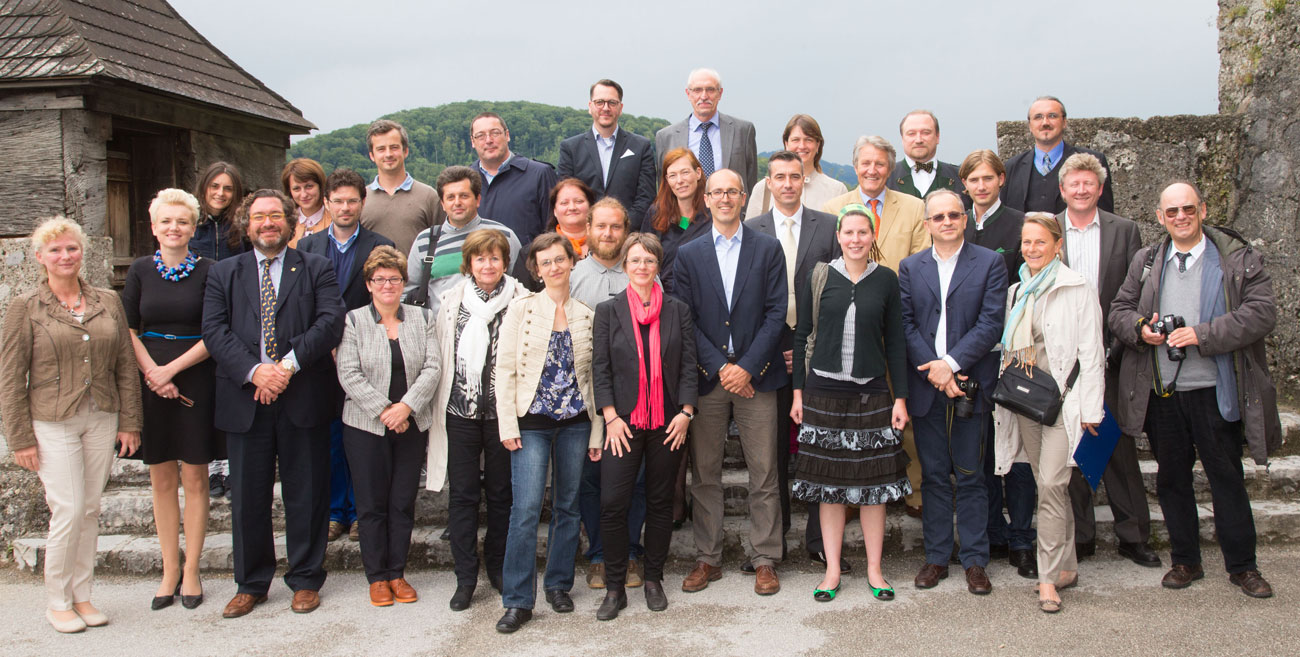
    BFR Kick-Off Meeting, Slubice (Poland) 2005
    Dr Andrzej Kunt, Major City Kostrzyn nad Odra, PL (re) and Hartmut Röder, Coordinator
    EU project BFR (left), at opening ceremony of redeveloped „Berlin Gate“ in Oldtown of Kostrzyn, 2007

    The heads of ECCOFORT organised the preparation of the project, the development of the project application, and managed the realisation and the foundation of permanent institutions. Lead partner was the city of Kostrzyn nad Odra / Poland.

    Members of Baltic Fort Route

    Germany:
    Fortress Dömitz, Citadel Spandau (Berlin), Fort Hahneberg (Berlin), Fortress Peitz, Fort Gorgast

    Poland:
    Fortress Kostrzyn nad Odra, Fortresses Kolobrzeg, Fortress Hagelsberg (Gdansk), Fortress Weichselmünde (Gdansk), Fortress Modlin, Fortress Boyen, Fortresses Swinemünde

    Lithuania:
    Fortresses Kaunas

    Russia:
    Fortress Königsberg

    Have a look at the geographical map with all the fortress members (Google Earth is required): Fortresses of Baltic Fort Route (BFR)

  • FORTE CULTURA Projekt 2011-2014

    FORTE CULTURA Project 2011-2014

    „Architectura militaris“ - cultural heritage with special tourism potential

    Fortified monuments have great potential for the tourism industry and are in the process of being transformed into modern worlds of experience. ECCOFORT initiated the transnational cooperation project „Forte Cultura“ with 13 partners from 8 Central European countries. Funded by the European Union, they jointly laid the foundations between 2012 and 2014:

    • for a new quality of international fortress tourism,
    • created a tourist brand for fortress tourism for the first time,
    • developed new marketing tools for fortresses and
    • founded a European fortress network.

    Further information on the completed EU project can be found on the project page: www.forte-cultura-project.eu
    The website of the European Cultural Route FORTE CULTURA can be found at www.forte-cultura.com
    The website of the FORTE CULTURA network can be found at www.forte-cultura.network

    Today, ECCOFORT is the headquarters and marketing agency of the international network for fortress tourism and marketing.

    New structures for fortress tourism and fortress marketing

    The project created a new framework for the preservation, touristic utilisation and economic consolidation of the cultural heritage of fortress monuments. This includes the European Cultural Route and a responsible management organisation.

    Logo FORTE CULTURA
    • FORTE CULTURA® is a registered trade mark under European law
    • FORTE CULTURA® is a specialised tourism product for fortified monuments, funded by the European Union from 2012 to 2014
    • FORTE CULTURA® is supported by FORTE CULTURA e.V. (formerly European Fortress Tourism and Fortress Marketing Network e.V.).
    • FORTE CULTURA® is an extensive European fortress network, the cultural route includes more than 60 stations in 14 countries.

    Fortress sites involved in the project

    Hohensalzburg Fortress (AT)
    Kufstein Fortress (AT)
    Fortified Tratzberg Castle (AT)
    Ideal fortress town Josefov (CZ)
    Rosenberg Fortress, City of Kronach (DE)
    Königstein Fortress (DE)
    Fort Monostor, Komarom (HU)
    Fortress region of Verona (IT)
    Fortified City of Kostrzyn (PL), Lead Partner

    Organisations / institutes involved in the project

    Austrian State Archives (War Archives) Vienna (A)
    ECCOFORT- European Cooperation Centre for Fortified Heritage (DE)
    Humboldt University of Berlin (DE)
    TIAW - Thuringian Institute for Academic Continuing Education (DE)
    Hungarian Tourism Agency (HU)
    National Fortress Association Italy (IT)
    European Cultural Routes Institute (LUX)
    National Institute for Monuments Slovenia (SLV)

en_GB